
AI‑Powered Cybersecurity: Beginner’s Guide to Threat Detection
As the use of cyberattacks continues to increase and they become more sophisticated, it has become essential for businesses to adopt advanced technologies to stay ahead of bad actors.
This is where Artificial Intelligence (AI) plays a crucial role. AI is a powerful tool that is transforming the way organizations detect, manage, and respond to cyber threats.
By using and integrating AI, cybersecurity teams gain valuable insights and can automate time-consuming processes, enabling faster and more accurate decision-making.
Table of Contents
What is AI in Cybersecurity?
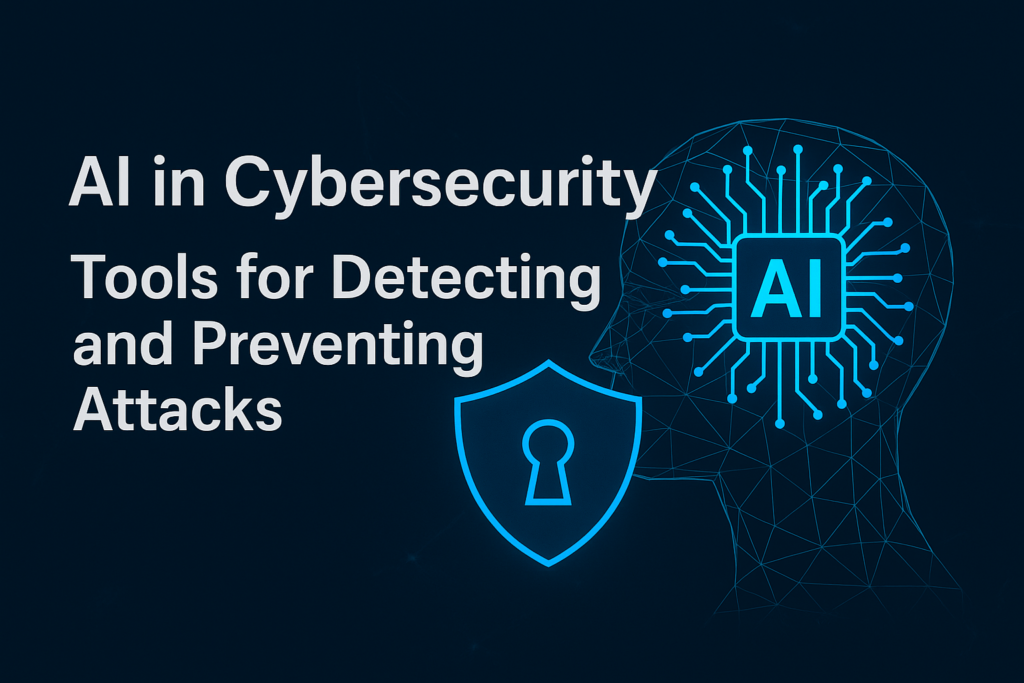
The main meaning of AI in cybersecurity is the integration of artificial intelligence technologies, such as machine learning and neural networks, into security frameworks. These technologies enable cybersecurity systems to analyze large volumes of data, identify patterns, and adapt to new and evolving threats with minimal human intervention.
Compared to traditional cybersecurity tools, which rely on predefined rules to detect threats, AI-driven systems learn from experience. As a result, they can more effectively predict, detect, and respond to both known and unknown threats. In this way, AI helps organisations strengthen their cybersecurity posture and significantly reduce the chances of data breaches.
3 Stages in AI Cybersecurity
In cybersecurity, AI includes technologies that can understand, learn, and take action based on data. AI is evolving through three main stages:
- Assisted Intelligence
- Augmented Intelligence
- Autonomous Intelligence
1) Assisted Intelligence:
Improves the tasks that individuals and organizations already perform today by using feedback and support.
2) Augmented Intelligence:
Provides new capabilities that enable people to perform tasks that were not previously possible.
3) Autonomous Intelligence:
Represents future technology where machines will work independently, such as self-driving cars.
Why is AI in Cybersecurity Important?
The importance of AI in cybersecurity can never be ignored. As cyber criminals continue to adopt highly sophisticated techniques and their activities become more complex, it is increasingly difficult for conventional security systems to keep pace with them. In addition, the massive amount of data generated by modern networks makes threat detection even more complex, causing many organisations to become highly vulnerable to cyber attacks.
AI provides solutions to these challenges in the following ways:
- Enhancing the speed and accuracy of threat detection
- Automating routine tasks
- Predicting future attacks
Enhancing the Speed and Accuracy of Threat Detection
AI can quickly analyze large volumes of data, detect anomalies, and easily identify potential risks, which significantly reduces response time to threats.
Automating Routine Tasks
AI automates time-consuming processes such as log analysis and vulnerability scanning, allowing security teams to focus more on strategic and high-priority activities.
Predicting Future Attacks
By identifying patterns from past attacks, AI can anticipate new and emerging threats, helping organizations stay one step ahead of cybercriminals.

Applications of AI Agents in AI‑Powered Cybersecurity.
- Threat Detection.
- Incident Response.
- Security Advisories.
- Phishing Detection.
- Malware Analysis.
- Other Applications.
1) Threat Detection:
LLM agents can analyze raw event data and alerts to determine whether they suggest malicious activity. They can also detect unusual patterns in logs that are not explicitly coded as rules, which is very important.
2) Incident Response:
Agents continuously triage alerts but do not completely replace detection engines. When an alert is triggered, the agent automatically gathers a large amount of related data, such as cloud logs, identity logs, and EDR telemetry, to decide whether the alert represents a real threat before taking action. Agents can also summarize and group alerts, for example, 50 alerts might indicate a single port scan attempt rather than 50 separate incidents.

3) Security Advisories:
Agents can answer questions like, “Am I affected?” and in incident response, “How am I affected and how severe is it?”
4) Phishing Detection:
Through semantic analysis, AI agents go beyond static filters. They check email writing style, urgency or fear cues, consistency with past communications, and social engineering indicators before making decisions.
5) Malware Analysis:
LLMs can read code and explain it in natural language, effectively working like a junior reverse engineer. An analyst can provide suspicious code, and the agent breaks it down, identifies suspicious API calls, and then takes appropriate action.
6) Other Applications:
AI agents assist with vulnerability management, risk management, threat hunting, and many other tasks, taking action based on analysis.
Limitations and Risks:
AI agents can produce hallucinations — incorrect or fabricated information. Autonomous execution without checks can be dangerous. Human confirmation is necessary for high-risk actions. Adversarial manipulation is also a concern, as attackers may attempt to manipulate agent inputs. False positives and overfitting can occur. It is essential to keep humans in the loop and maintain healthy skepticism. AI should assist human thinking, not replace it entirely.

Deployment Best Practices:
AI‑Powered Cybersecurity deployment best practices has to Start with limited permissions, extensively test, review work outputs, and gradually increase trust as the agent proves consistent.
Ideal Workflow:
Ideal Workflow has following 8 steps for ideal system.
- Collect original data from security sources (SIEM).
- Enrich the data using threat intelligence sources.
- Correlate information across multiple sources as needed.
- Analyze patterns to make predictions.
- Assign risk triage and priorities.
- Reference frameworks like MITRE ATT&CK for additional context.
- Recommend responses.
- Document actions in the form of a ticket or case.
Conclusion
AI‑Powered Cybersecurity AI agents powered by LLMs are ushering in a new era of cybersecurity operations, where machines play intelligent roles alongside humans and perform tasks efficiently. They handle alerts, dissect malware, draft incident reports, and augment the capabilities of human analysts. Unless we hire another 500,000 experts like Jeff Crumes, AI agents will continue to play a growing role in cybersecurity, empowering organizations to respond more effectively to threats and make better decisions.